Maximizing Throughput: Why the Vacuum Gripper is the Best Choice for High-Speed Palletizing
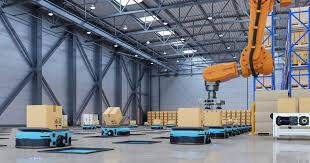
In the modern warehouse environments of 2026, the speed of your production line is only as fast as your end-of-line packaging. As global logistics centers face increasing pressure to handle a “high-mix” of products—ranging from heavy corrugated boxes to porous bags of grain—the demand for versatile palletizing solutions has reached a fever pitch. While mechanical claws were once the industry standard, the vacuum gripper has officially taken the throne, offering a combination of speed, safety, and adaptability that is essential for high-throughput operations.
By utilizing the principles of fluid dynamics rather than mechanical force, a vacuum gripper allows a single robotic arm to handle a vast array of product types without the need for frequent, time-consuming tool changes.
The Strategic Advantages of Vacuum Gripper Technology in Palletizing
Why are logistics managers across the globe retiring their mechanical grippers in favor of vacuum systems? The answer lies in the unique way a vacuum gripper interacts with the payload.
1. Superior Speed and Response Times
In a high-speed palletizing cell, every millisecond counts. Mechanical grippers require the “fingers” to physically open and close around an object, which introduces a mechanical delay into every cycle. A vacuum gripper, particularly one powered by a high-efficiency Venturi ejector, creates a seal the instant it touches the surface. This faster “pick” cycle can increase the throughput of a robotic cell by up to 20-30% over a 24-hour shift.
2. Distributed Payload Support
Heavy or “deformable” items, such as large bags of flour or soft cardboard cartons, can be easily damaged by the concentrated “clamping force” of a mechanical claw. A vacuum gripper typically utilizes a large-area foam pad or an array of multiple suction cups. This design distributes the lifting force evenly across the entire top surface of the object, preventing tearing, crushing, or structural deformation.
3. Top-Down Picking for Optimal Space Utilization
Mechanical grippers often need space on the sides of a box to “grab” it, which limits how tightly products can be packed on a pallet. Because a vacuum gripper picks from the top, it allows for “zero-gap” palletizing. This maximizes the utilization of pallet space and ensures a more stable, secure load for transportation.
Technical Mastery: Handling Porous and Irregular Surfaces
A common misconception in the past was that a vacuum gripper could only handle smooth, airtight surfaces like glass or metal. In 2026, advanced “High-Flow” vacuum technology has solved the challenge of porous materials.
- Foam Area Grippers: These utilize a specialized, self-closing valve system. If a portion of the foam pad is not touching the product (or is touching a porous material like burlap), the valves in that zone automatically close. This concentrates the vacuum flow only where it is needed, allowing for the secure lifting of items that were previously thought “un-pickable.”
- Bellows Integration: For pallets where the top surface is uneven—such as shrink-wrapped water bottles or crumpled bags—bellows-style cups allow the vacuum gripper to “reach down” and create a seal on varying heights simultaneously.
For more technical insights into how these air-flow systems are engineered for maximum lift capacity, we recommend referring to this deep-dive on industrial vacuum grippers and suction technology.
Reducing Total Cost of Ownership (TCO)
Beyond performance, the vacuum gripper offers significant long-term economic benefits:
- Lower Maintenance: With fewer moving parts than a mechanical assembly, vacuum systems suffer from less mechanical wear and tear.
- Energy Savings: Modern “Air Economizer” functions can reduce compressed air consumption by up to 90% by shutting off the vacuum generation once a secure seal is detected and only “pulsing” to maintain the hold.
- Safety: Vacuum systems are inherently safer for human collaborators, as they lack the high-pressure “pinch points” found in pneumatic or hydraulic claws.
Conclusion: The Future is Vacuum-Powered
The transition to vacuum gripper technology is a hallmark of the agile factory. By providing a tool that can adapt to the product rather than requiring the product to adapt to the tool, manufacturers can achieve a level of flexibility that drives true profitability. In the race to automate the global supply chain, the most successful operations are those that let the physics of the vacuum do the heavy lifting.