Key Product Owner Skills for Successful Scrum Delivery
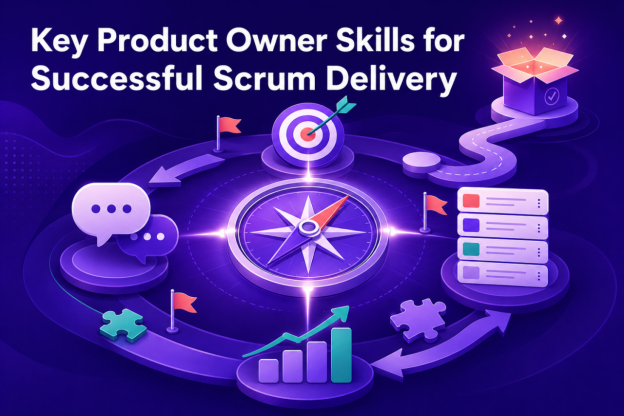
How can a Product Owner turn a promising idea into something customers genuinely value? Success requires more than maintaining tasks or attending Scrum events. Product Owners must connect customer expectations, business goals and team efforts. A Scrum Certification can help professionals understand the practices behind the responsibility. However, effective delivery also depends on practical skills such as planning, communication and prioritisation. These abilities guide everyday product decisions.
In this blog, we will explore the essential Product Owner skills that support focused teamwork, valuable outcomes and successful delivery.
Table of Contents
- Product Owner Skills That Turn Scrum Goals into Value
- Conclusion
Product Owner Skills That Turn Scrum Goals into Value
The following skills help guide the team, organise product work and deliver outcomes that meet customer and business needs:
Product Vision and Goal Setting
A clear product vision gives the Scrum Team a common direction. It outlines the product’s goals, the people it will assist, and why it matters.
The Product Owner must transform this vision into a workable product goal. Professionals can better grasp how the Product Goal directs product development with the knowledge acquired through a Scrum Certification. Effective goal-setting ensures that daily choices are linked to a larger objective.
Product Backlog Management
The Product Backlog contains the work required to enhance the product. The Product Owner is responsible for keeping the items clear and in the right order.
This must be reviewed and improved regularly. The Product Owner’s comprehension of Product Backlog duties can be improved with a Scrum Certification. In addition to giving developers a reliable overview of future work, efficient product backlog management also improves focus during sprint planning.
Stakeholder Communication
Stakeholders may have different expectations about product features and delivery schedules. The Product Owner must communicate honestly and clearly.
Effective stakeholder communication entails discussing progress and listening to concerns. When not every request can be fulfilled right away, it also requires managing expectations. Frequent communication builds confidence and keeps stakeholder demands from constantly disrupting the Scrum Team.
Customer Needs Understanding
If a product solves the wrong client need, can it still be valuable? Instead of making assumptions, Product Owners need to know what users actually need.
Through surveys, feedback, interviews, and product usage data, they can gain insights. These results highlight customer issues and evolving expectations. With a thorough grasp of their customers, they can select features that deliver real value and keep the product relevant.
Collaboration with the Scrum Team
The Scrum Master and Developers collaborate closely with the Product Owner. Trust and consistent communication are essential in this partnership.
Obtaining a Scrum Certification might help you understand how various Scrum accountabilities complement one another. While listening to technical concerns, they should clarify the purpose of items in the Product Backlog. Strong teamwork fosters better product solutions and a shared understanding.
User Story Development
Customer-focused product needs can be described through user stories. Product Owners must be able to write them in an understandable, straightforward way.
Every narrative should describe who needs what, why it matters, and what they need. Instead of treating stories as fixed instructions, they should discuss them with developers. Effective user story development supports clearer expectations and better planning.
Adaptability and Problem Solving
During product development and corporate goals may shift. Product Owners need to react while keeping the product’s vision in mind.
They can review fresh information and make essential adjustments to the Product Backlog thanks to their adaptability. When challenges arise, strong problem solving skills support calm decision making. These skills enable the Scrum Team to continue producing worthwhile product enhancements while managing uncertainty.
Release Planning and Progress Monitoring
Product Owners must comprehend how finished work contributes to planned releases and broader corporate objectives. Practical planning and frequent progress reports are necessary.
Professionals can better grasp how Scrum encourages regular inspection and adaptation by earning a Scrum Certification. Release planning gives stakeholders a helpful overview of future product capabilities. Monitoring the product’s progress also reveals whether it is headed in the right direction.
Conclusion
A capable Product Owner brings direction and value to every stage of Scrum delivery. Vision setting, prioritisation, customer understanding and collaboration help transform ideas into useful outcomes. Planning and measurement keep product decisions connected to real progress.
Professionals can develop these practical capabilities by pursuing a Scrum Certification with The Knowledge Academy, a global training provider. When teams apply these skills consistently, teams gain clearer priorities, stronger stakeholder trust, and a better chance of delivering products customers need.