Why Energy Efficiency is the New Standard for Property Value
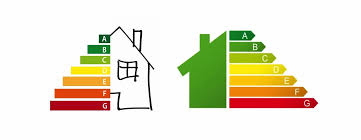
For New York City building owners, the conversation around sustainability has fundamentally shifted. A few years ago, energy efficiency was a “nice-to-have”—a marketing bullet point for LEED certification or a corporate social responsibility initiative. Today, under the weight of Local Law 97, it is a hard financial metric that sits directly on the balance sheet.
The compliance periods are no longer abstract future dates. With the 2024 limits now in effect and the stricter 2030 thresholds looming, asset managers are facing a binary reality. You either position your building as a high-performing asset, or you risk holding a property that bleeds Net Operating Income (NOI) through penalties and operational inefficiencies.
However, viewing this landscape solely through the lens of compliance costs is a strategic error. While the anxiety surrounding emissions limits is real, the market is signaling a massive opportunity. We are witnessing a divergence in NYC real estate: a split between modernized, efficient buildings that command premiums and aging, inefficient structures that are losing their liquidity.
In this market, energy efficiency is the new baseline for preserving and increasing property value. It is the difference between a stranded asset and a high-yield investment.
The Financial Reality of Local Law 97
Many owners are still treating Local Law 97 as a standard code update, assuming they can pay a small fee and move on. This is a miscalculation. The law establishes strict carbon caps for buildings over 25,000 square feet, and the financial penalties for exceeding these caps are designed to be punitive, not negligible.
The mechanics are straightforward but brutal. Every ton of Carbon Dioxide Equivalent (CO2e) your building emits over its specific limit triggers a penalty. As noted by the New York City Department of Buildings, buildings that exceed their emissions limits can be fined at a rate of $268 per ton of CO2e over the limit.
The real danger here lies in how these fines impact valuation. Unlike standard operating expenses, which can often be passed through to tenants depending on lease structures, these fines frequently land squarely on the owner. When your NOI drops due to six-figure penalties, your property’s value decreases exponentially based on the prevailing cap rate.
Turning these legislative hurdles into a value-add requires a shift from reactive repairs to institutional-grade energy planning. Bringing in building compliance consultants for Local Law 97 allows you to strip away the guesswork, providing a clear technical roadmap that identifies which upgrades will actually move the needle on your letter grade. This isn’t just about dodging penalties; it’s about timing your retrofits so they pay for themselves through energy savings and preserved market liquidity.
Why Inaction is a Liability
If the fines are the immediate “stick,” the longer-term threat is asset obsolescence. The real estate market is currently pricing in a “Brown Discount.” This term refers to the reduction in sale price and market liquidity for buildings that fail to meet modern sustainability/efficiency standards.
We are entering an era where a building’s energy profile is part of standard due diligence. Lenders, insurers, and institutional investors are increasingly hesitant to engage with properties that carry a heavy “carbon liability.” If a building requires millions of dollars in retrofits just to become legally compliant in 2030, a potential buyer will deduct that cost—plus a risk premium—from their offer price today.
The global data supports this shift in risk perception. According to research highlighted by Smart Buildings Magazine, up to 65% of office buildings globally are at risk of becoming obsolete by 2030 if they fail to decarbonize.
In the competitive NYC market, where inventory is high, tenants and buyers have choices. An inefficient building doesn’t just cost more to run; it signals deferred maintenance and a lack of future-proofing, making it a liability in any portfolio.
The “Green Premium”: How Efficiency Drives Revenue
While the risks are significant, the upside for proactive owners is equally compelling. The “Green Premium” is real, quantified, and growing. Buildings that undergo deep energy retrofits don’t just avoid fines; they outperform the market in leasing velocity and rental rates.
Tenants, particularly Fortune 500 companies and high-growth tech firms, have their own corporate sustainability goals. They need to report on their Scope 3 emissions (which includes the carbon footprint of their leased office space). Consequently, they are willing to pay more for space that helps them meet those targets.
JLL’s research into this phenomenon is telling. They found that green certified office assets across global markets command rental premiums ranging from 7.1% to 11.6%.
Consider the compound effect on your valuation:
- Lower OpEx: Energy efficiency reduces utility bills, instantly boosting NOI.
- Higher Revenue: You command a rental premium (the 7-11% cited above).
- Better Cap Rate: Lower risk profiles often attract more aggressive financing and valuation multiples.
When you combine the avoidance of the $268/ton fine with a rental premium and lower utility costs, the Return on Investment (ROI) for energy efficiency retrofits becomes undeniable. It ceases to be a compliance expense and becomes a value-add capital improvement.
Conclusion
The era of ignoring energy efficiency in New York City real estate is over. Local Law 97 has permanently altered the math of property valuation.
As an owner, you face a clear choice. You can accept the “Brown Discount,” watching your NOI erode through fines and your asset value wither due to obsolescence. Or, you can seize the “Green Premium,” transforming regulatory pressure into a competitive advantage that attracts top-tier tenants and secures your property’s financial future.